Strategic Authority Guide: International Dredger Transportation
Technical Cargo Assessment for Maritime Projects
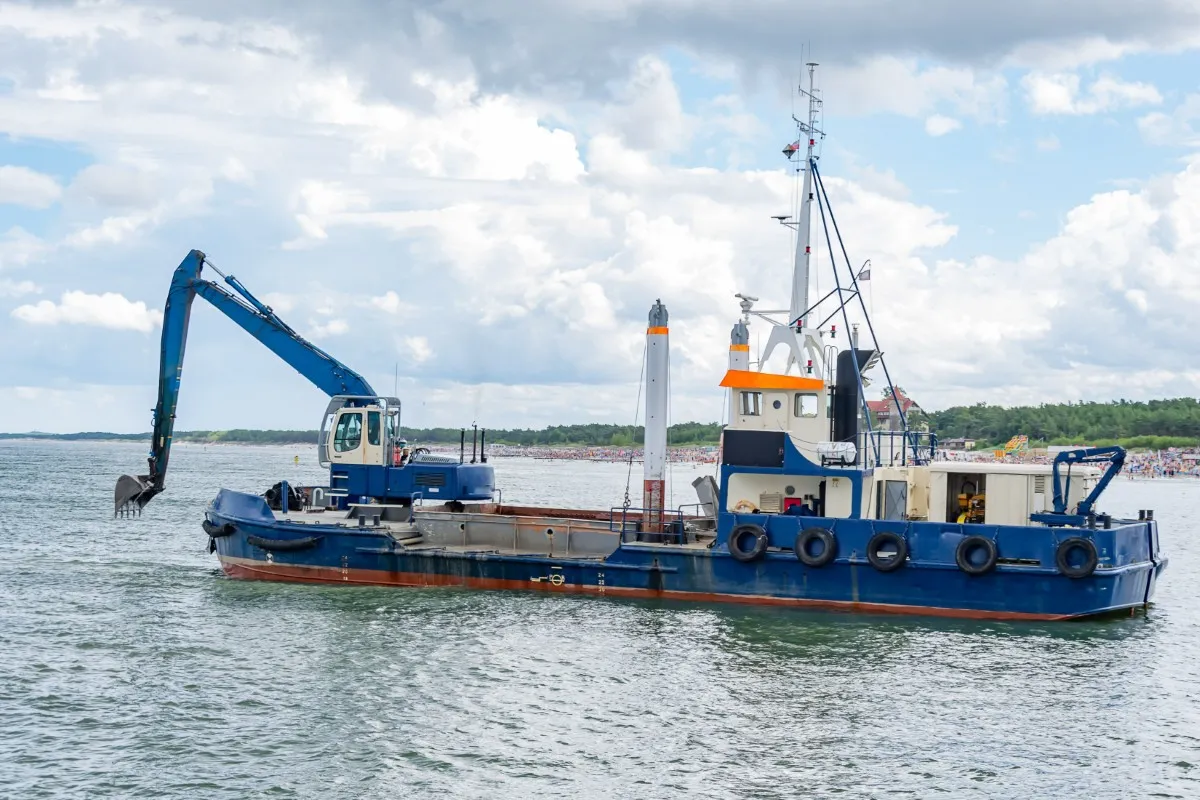
Shipping a dredger is not a standard freight move; it is a project cargo operation. The physical scale of cutter suction dredgers (CSD) or trailing suction hopper dredgers (TSHD) dictates every logistical decision. You must start with a technical data sheet that includes the total mass, the centre of gravity, and the lifting points. If the unit is Out of Gauge (OOG), it will not fit on a standard container ship and requires specialised sea freight solutions.
Dimensional and Material Integrity
Precise measurements are non-negotiable. You must account for the spuds, ladders, and discharge pipes, which often require disassembly. We verify the structural integrity of the hull before loading to ensure it can withstand the stresses of sea fastening. Any deviation in weight data can lead to a No Load order under SOLAS regulations, making accurate Verified Gross Mass (VGM) data a legal requirement for the shipper.
Vessel Selection: Engineering the Voyage
The choice of vessel depends on the dredger's buoyancy and the infrastructure at the destination port. Whether you are shipping to China or moving equipment from the USA, the vessel type is the primary cost driver.
Heavy-Lift and Semi-Submersible Options
For smaller units, a Heavy-Lift Vessel (HLV) equipped with high-capacity onboard cranes is often sufficient. However, for large harbour dredgers, we utilise Semi-Submersible vessels. These ships' ballast is discharged, allowing the dredger to float over the deck before de-ballasting to lift the cargo out of the water. For coastal moves or short transits within Europe, such as from Germany, a combination of tugboats and ocean-going barges may be more cost-effective.
Incoterms 2020: Risk and Liability Management
To avoid legal disputes, all project cargo must move under Incoterms 2020 rules as defined by the International Chamber of Commerce. These terms establish when the risk transfers from the seller to the buyer.
- EXW (Ex Works): The buyer assumes all risk from the factory. This is rarely advised for dredgers because the buyer must manage complex heavy-lift loading at an unfamiliar site.
- DAP (Delivered at Place): The seller is responsible for delivery to the destination port or site. The buyer handles customs clearance and VAT.
- CIF (Cost, Insurance, and Freight): The seller pays for the freight and a minimum level of insurance to the destination port. This is common for international maritime sales.
Documentation and Customs Compliance
Moving a dredger into or out of the UK requires a comprehensive documentation stack. Errors lead to port holds and Demurrage charges (fees for exceeding the agreed time at port). You must ensure your business has a valid EORI number to trade. Use the GOV.UK import portal to check the latest tariff codes and duty rates for industrial machinery.
Mandatory Documentation List
Our customs clearance specialists manage these essential filings:
- Bill of Lading (B/L): The legal contract of carriage and document of title.
- Certificate of Origin (COO): Required to verify the manufacturing source and apply for preferential trade rates.
- MSDS (Material Safety Data Sheet): Required if the dredger contains hazardous fuels, hydraulic oils, or residual waste.
- Export/Import Permits: Specific licenses for "dual-use" equipment or heavy machinery are often required by national authorities.
Risk Controls and Marine Insurance
Project cargo involves high capital values and high physical risks. We mitigate these through strict adherence to Standard Trading Conditions. As a member of the British International Freight Association, we operate under a framework that protects both the shipper and the forwarder.
VGM and Lashing Protocols
The Verified Gross Mass (VGM) must be communicated to the carrier before the cut-off date. This prevents vessel instability. Once on board, the dredger is secured using a lashing plan designed by marine surveyors. This includes welding D-rings to the deck and using high-tensile steel chains to prevent movement during heavy weather.
Comprehensive Insurance
Carrier liability is limited by weight and rarely covers the replacement cost of a harbour dredger. We recommend Institute Cargo Clauses A (All Risks) coverage. This protects against total loss, partial damage during loading, and General Average contributions if the vessel faces an emergency at sea.
Cost Drivers: BAF, Demurrage, and Logistics Fees
Project budgets are often squeezed by unforeseen logistics surcharges. Understanding these drivers allows for more accurate financial planning.
- BAF (Bunker Adjustment Factor): A floating charge to account for fuel price volatility. Since IMO 2020, this also reflects the cost of low-sulphur marine fuels.
- Demurrage and Detention: Daily penalties are charged if the dredger or its specialised transport equipment stays at the port longer than the free days allowed by the carrier.
- Mobilisation Fees: The cost of getting cranes, tugs, and specialist crews to the port of origin.
- Canal Tolls: If the route requires the Suez or Panama Canal, these high-cost tolls must be factored into the sea freight quote.
Frequently Asked Questions
What is the difference between Breakbulk and OOG for dredgers?
OOG (Out of Gauge) typically refers to cargo on a flat-rack container that exceeds standard width or height. Breakbulk refers to cargo that is too large for any container system and is loaded directly onto the vessel deck as a standalone unit.
Do I need a waste permit to ship a used dredger?
If the dredger contains significant residual silt or biological material, it may be classified under European Waste Catalogue (EWC) codes. You must consult the Environment Agency via GOV.UK to determine if a Transfrontier Shipment of Waste (TFS) permit is required.
How long does the customs process take for heavy machinery?
Most UK customs entries are processed within hours if the data is accurate. However, for specialised machinery like dredgers, Port Health or Border Force may require a physical inspection, which can add 2 to 5 days to the timeline.
Can I use air freight for dredger parts?
Yes. While the main hull moves by sea, critical components such as engine sensors or hydraulic pumps can be sent via air freight to minimise project downtime during reassembly at the destination port.