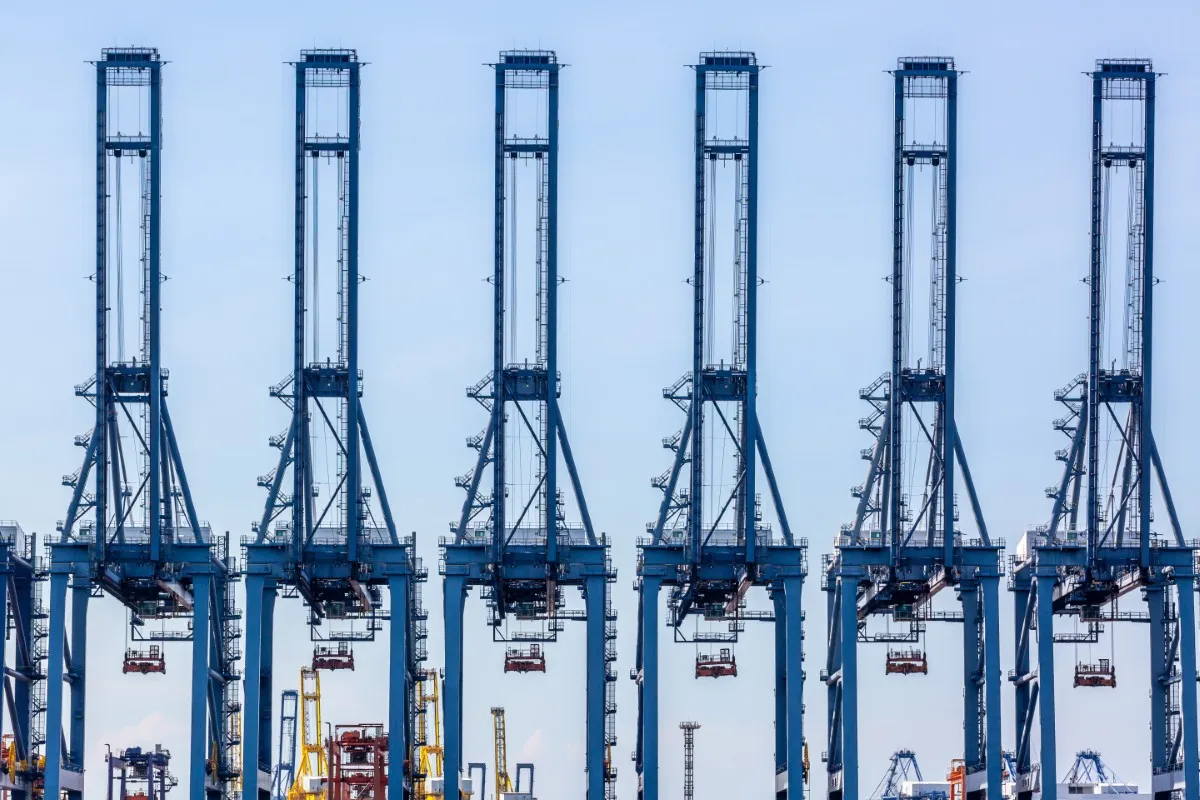
Shipping Dockside Gantry Cranes To and From the UK: The Technical Logistics Guide
Strategic Engineering and Pre-Shipment Assessment
Dockside gantry cranes are among the largest and most complex assets in the maritime supply chain. Whether you are moving a Ship-to-Shore (STS) crane or a Rubber-Tyred Gantry (RTG), the operation is defined by engineering tolerances rather than standard freight logic. Successful transit begins with a technical audit of the asset. You must provide a General Arrangement (GA) drawing to identify the exact centre of gravity and designated lifting points. This data prevents structural racking during crane operations and ensures the equipment remains stable throughout the voyage.
Most industrial cranes exceed the dimensions of standard containers, necessitating specialised sea freight solutions utilising Out-of-Gauge (OOG) equipment or dedicated heavy-lift vessels. If your crane is moved in large sections, it is classified as OOG, necessitating specialised road permits for the UK leg of the journey. For global movements, we verify specific port capabilities against the International Chamber of Commerce guidelines to ensure your chosen Incoterms align with your risk appetite.
Mode Selection: Heavy-Lift, Breakbulk, and Geared Vessels
The physical profile of a gantry crane dictates the shipping method. We categorise these shipments into three primary modes based on weight and dimension tolerances.
Specialised Heavy-Lift Vessels
For fully assembled cranes, we utilise semi-submersible heavy-lift vessels. These ships use ballast tanks to submerge their deck, allowing the crane to be rolled or floated on. This method minimises disassembly stress but requires significant water depth at the port of loading. We coordinate with port authorities to ensure the quayside can support the crane's ground pressure during the transition.
Breakbulk and Multi-Purpose Vessels
If the crane is disassembled into smaller components, we utilize Breakbulk shipping. This involves stowing the machinery directly onto the vessel deck or within the hold. In China, where many STS cranes are manufactured, we frequently utilise geared vessels via our sea freight China network. These ships carry their own high-capacity cranes, allowing for independent discharge at UK ports lacking shore-side heavy-lift infrastructure.
Road Freight and Abnormal Load Transport
The journey from the port to the final terminal involves complex road freight planning. In the UK, crane sections are classified as abnormal loads. Moving these requires specialised multi-axle modular trailers. We manage the mandatory ESD2 notifications to UK police and highway authorities, ensuring the route is pre-cleared for bridge heights and turning radii.
Incoterms 2020 and Financial Risk Allocation
Selecting the correct Incoterm (International Commercial Terms) is a critical commercial decision. For gantry cranes, Ex Works (EXW) is rarely advisable, as it requires the buyer to handle complex loading at a third-party factory. We typically recommend Free Carrier (FCA) or Delivered at Place (DAP). These terms ensure the seller, who has the best technical knowledge of the asset, is responsible for the initial loading and export customs clearance.
Under DAP, the risk transfers to the buyer only when the goods are ready for unloading at the destination. This is essential for high-replacement-value equipment moving to regions like the USA. Our sea freight USA team ensures all local arrival risks are accounted for in the contract terms. Ensure your commercial invoice mirrors the latest GOV.UK trade documentation standards to prevent port-side holds and administrative delays.
Customs Clearance, VAT, and Duty Management in the UK
Importing or exporting industrial cranes involving the UK requires a deep understanding of tax structures. You must account for 20 percent Import VAT and applicable customs duties. Gantry cranes typically fall under HS Code Chapter 84. Our customs clearance team uses the Customs Declaration Service (CDS) to manage entries, ensuring any applicable relief is identified well before the vessel arrives.
Inward and Outward Processing Relief
If a crane enters the UK for specialised repair or upgrade before being re-exported, you may utilise Inward Processing (IP). This regime allows you to suspend Import VAT and duty, providing a significant cash-flow advantage. Similarly, Temporary Admission (TA) can be used for units brought to the UK for testing or exhibition. We advise clients to check the GOV.UK customs guidance to ensure they meet the criteria for these relief schemes.
Technical Documentation and Legal Compliance
Compliance for industrial cranes extends beyond simple manifests. Because these units contain sophisticated electrical assemblies, hydraulic oils, and often hazardous paints, documentation must be exhaustive to prevent demurrage charges.
- Certificate of Origin (COO): Required to determine preferential duty rates under UK Trade Agreements.
- Material Safety Data Sheet (MSDS): Required for the crane as it contains significant quantities of hydraulic fluids and lubricants.
- Export Licenses: Some dual-use technology in crane control systems may require a license from the Export Control Joint Unit.
- Packing List: A detailed breakdown of every component, frame, and securing bolt.
For urgent spare parts or control systems, we utilise air freight to minimise downtime during the installation phase. All shipments must adhere to the British International Freight Association standards. We recommend reviewing the BIFA guidelines for standard trading conditions.
Risk Controls: SOLAS VGM and Marine Insurance
Safety at sea is governed by strict international conventions. Two areas are non-negotiable for crane logistics: weight verification and insurance coverage.
Verified Gross Mass (VGM) Compliance
Under the Safety of Life at Sea (SOLAS) convention, every item loaded onto a ship must have a certified weight. For gantry cranes, we utilise Method 2 for Verified Gross Mass (VGM). This involves weighing the individual components and adding the weight of the lashing, crating, and dunnage. Inaccurate weight declarations can lead to vessel instability and are strictly enforced by the Maritime and Coastguard Agency. Failure to provide a VGM will result in the cargo being rejected at the port terminal.
Marine Cargo Insurance
Carrier liability is limited by the Hague-Visby Rules, which usually cover only a few pounds per kilogram. This is insufficient for a multi-million-pound crane. We advise securing Institute Cargo Clauses (A) for All Risks coverage. This protects against theft, damage during heavy weather, and handling accidents. Given the technical nature of cranes, ensure the policy covers Mechanical and Electrical Derangement, as internal damage without external signs of impact can render a unit inoperable.
Physical Protection and Sea-Fastening
Ocean transit exposes machinery to salt spray and G-forces. We implement a multi-layered protection strategy:
- Vapour Corrosion Inhibitors (VCI): We use heat-sealed barrier foil to prevent oxidation of control panels and electrical contacts.
- ISPM 15 Timber Standards: All timber used for crating and blocking must carry the official heat-treatment stamp to prevent the spread of wood-boring pests.
- Welded Sea-Fastening: For fully assembled cranes, we weld steel stoppers and clips directly to the vessel deck to prevent horizontal movement. This is a technical engineering task that requires a Method Statement approved by the vessel master.
Understanding Cost Drivers and Budgetary Risks
The freight rate is only one component of the total landed cost. When budgeting for gantry crane logistics, you must account for technical variables:
- Bunker Adjustment Factor (BAF): Fuel surcharges that fluctuate with global oil prices. These are particularly volatile since the IMO 2020 low-sulphur mandate.
- Demurrage and Detention: Daily fees incurred if the unit remains at the port beyond the agreed free-time, often due to paperwork errors.
- Lashing and Securing Fees: The cost of the professional labour required to secure the cargo using certified chains and turnbuckles.
- Canal Tolls: If transit involves the Suez or Panama canals, surcharges are calculated based on the vessel's net tonnage and cargo profile.
Frequently Asked Questions
What is an OOG shipment for a gantry crane?
OOG stands for Out-of-Gauge. It refers to cargo that exceeds the standard dimensions of a 40ft container. For cranes, this usually means shipping the main girder or trolley as a single large unit on a flat rack or as breakbulk cargo.
How is the weight of a crane verified for shipping?
We use Method 2 for VGM, which requires weighing all individual components, packing materials, and the transport cradle. This total is then added to reach the final certified weight required by the carrier and port authorities.
How is VAT handled on crane exports from the UK?
Exports from the UK are generally zero-rated for VAT, provided you maintain official proof of export. This includes the Bill of Lading or an S8 document from a BIFA-accredited agent. For imports, you may use Postponed VAT Accounting (PVA) to improve cash flow.
Do I need a Material Safety Data Sheet (MSDS) for a crane?
Yes. Because modern gantry cranes contain significant quantities of hydraulic oil, gear grease, and batteries, they are classified as potentially hazardous. The carrier requires the MSDS to determine the correct stowage position on the vessel in accordance with the IMDG Code.
How long does it take to plan an international crane shipment?
Due to the need for route surveys, crane scheduling, and specialised lashing plans, you should allow at least 3 to 6 months for the planning phase. This ensures all technical and regulatory requirements are met before the cargo leaves the port.