Expert Stevedoring Services: Handling Cargo with Precision
Physical Precision at the Port
Stevedoring constitutes the frontline of maritime logistics. It is the skilled operation of loading, stowing, and discharging cargo between a vessel and the quay. At Shipping International, we recognise that the safety of your cargo depends on the technical proficiency of the terminal operators and longshoremen managed at each port of call. A single error in weight distribution or lashing can lead to container loss at sea or structural damage to the vessel.
Our team provides technical oversight for all stevedoring activities. We coordinate with port authorities to manage berth allocation, heavy lift crane availability, and the complex customs clearance requirements that accompany international cargo handling.
Technical Cargo Handling Capabilities
Different cargo types demand specific handling methodologies and specialised terminal equipment to ensure safe transit.
Containerised Cargo and Ship to Shore Cranes
For standard containerised goods, precision is driven by automated terminal systems and high-speed cranes. We manage the transition from the container yard to the vessel. Our team ensures all units are stowed according to the vessel master bay plan to maintain stability. This includes managing the Verified Gross Mass data required by law before any unit is loaded.
Breakbulk and Project Cargo
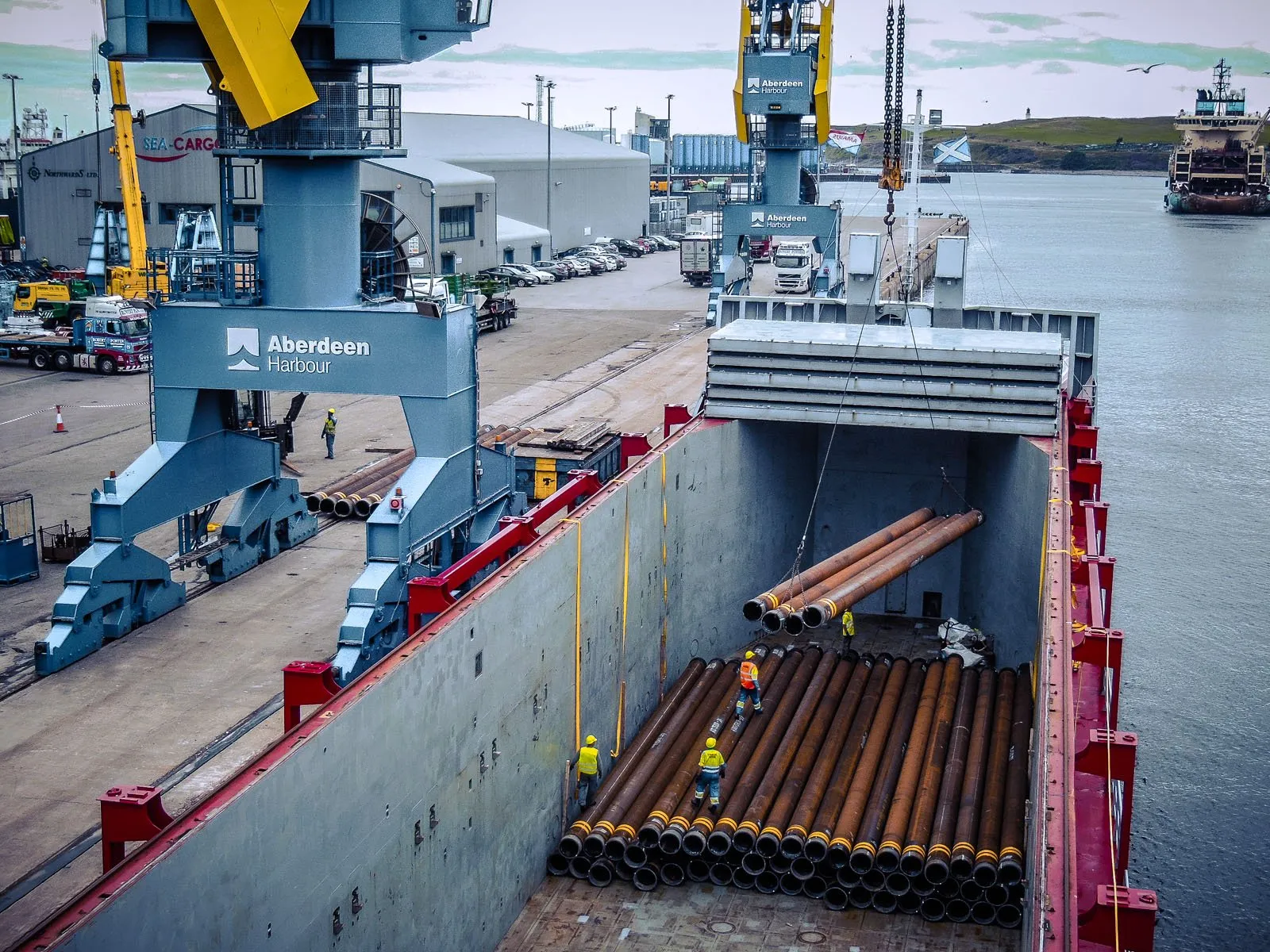
When cargo is too large or heavy for a standard box, it is handled as breakbulk or out-of-gauge cargo. This requires specialised stevedores who understand the mechanics of heavy lift tackle and the physics of lashing complex shapes directly to the vessel deck or into the holds. We coordinate the use of floating cranes or heavy-duty mobile harbour cranes for these critical lifts.
Bulk Commodities
Moving large volumes of raw materials such as grain, ore, or chemicals requires specialised discharging equipment, such as grabs, conveyors, or pneumatic systems. Our stevedoring partners ensure that these materials are trimmed and stowed correctly to prevent shifting during the voyage.
Managing Costs: Terminal Handling and Liner Terms
Stevedoring costs are a significant component of the total freight invoice. Understanding how these charges are applied is essential for procurement teams.
- Terminal Handling Charges: This fee covers the cost of moving a container from the vessel to the stack or from the stack to the vessel. It varies significantly by port and is often influenced by local labour agreements and infrastructure investment.
- Free In and Out: Under these terms, the carrier is not responsible for the cost of loading or discharging the cargo. The shipper or consignee must arrange and pay for the stevedoring services independently.
- Liner In or Free Out: In this scenario, the loading costs are included in the freight rate. The receiver is responsible for the unloading costs at the destination port.
- Overweight Surcharges: Containers that exceed standard weight limits often trigger additional terminal handling fees because they require specialised chassis or slower crane movements.
Lashing, Securing, and Sea Fastening
The role of a stevedore extends beyond just lifting cargo. Once the goods are on board, they must be secured to withstand the forces of the open ocean.
Timber Dunnage and Bracing
We use heat-treated timber dunnage to fill voids and distribute weight across the vessel deck or container floor. This prevents the cargo from sliding or toppling. All timber used in our stevedoring operations complies with international standards to prevent the spread of pests between continents.
Steel Strapping and Chains
For heavy industrial machinery or steel pipes, stevedores use high-tensile steel strapping and heavy chains. These are tightened with turnbuckles and often welded to steel stoppers on the deck for maximum security. Our team audits these lashing plans to ensure they meet the specific requirements of the vessel cargo securing manual.
Risk Management and HSSEQ Compliance
The port environment is one of the most hazardous workplaces in the logistics chain. Shipping International operates under a strict Health, Safety, Security, Environment, and Quality framework to protect both cargo and the personnel handling it.
We ensure that every port we use complies with the International Ship and Port Facility Security Code. This guarantees that your goods are stored in secure facilities with restricted access and continuous monitoring. Furthermore, we provide comprehensive cargo insurance to protect against damage during loading or discharging. These are risks that are often excluded from standard maritime liability.
Frequently Asked Questions
What is a stevedore, and how do they differ from a freight forwarder?
A stevedore is the physical operator at the port responsible for the manual or mechanical loading and unloading of ships. A freight forwarder like Shipping International is the logistics architect who manages the entire journey. This includes hiring the stevedores and coordinating the sea freight and road transport.
Who pays for terminal handling charges?
This depends on the agreed Incoterms. For example, under FOB terms, the seller typically pays the charge at the origin port, while the buyer pays at the destination. Under CIF terms, the seller covers the origin costs and the freight, but the buyer may still be liable for destination handling fees.
What is a container load plan, and why is it important for stevedores?
A container load plan is a detailed diagram showing exactly where each item is placed inside a container. Stevedores use this information to understand the weight distribution and identify any hazardous materials that require specific stowage positions on the ship.
Can you handle the loading of oversized cargo that does not fit on a trailer?
Yes. For extremely large items, we use breakbulk shipping, in which cargo is lifted directly from the quay to the vessel. We coordinate specialised trailers and mobile cranes for the road freight leg to bring the cargo alongside the ship for loading.
What does stowed and trimmed mean in bulk shipping?
Stowing refers to the physical placement of cargo in the hold. Trimming involves levelling the material to ensure the vessel remains stable. Improperly trimmed bulk cargo can shift during heavy weather, causing the ship to list dangerously.
How do stevedores manage the security of high-value cargo at the port?
Ports use a combination of physical barriers, CCTV, and restricted access zones. Containers are secured with high-security bolt seals. The numbers are recorded on the Bill of Lading and verified by stevedores at each handling point to verify the cargo's integrity.